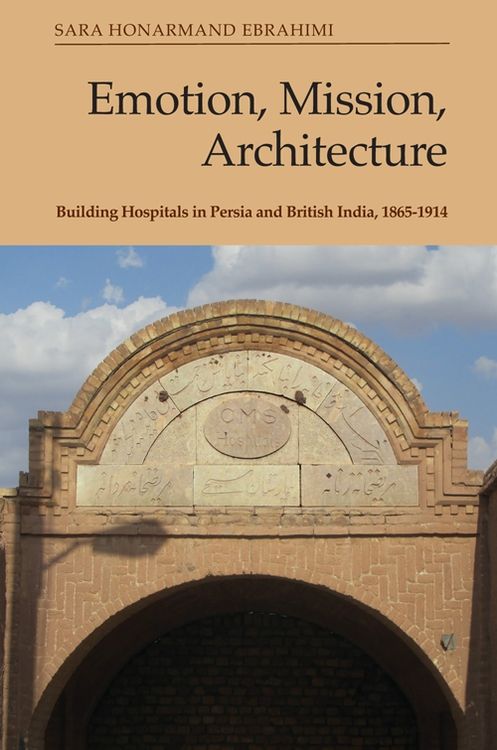
Over the past few decades, the history of emotions has coalesced into a distinct field premised on the idea that “emotion varies across time and place and so has a history that can be explored by scholars.”1 In Emotion, Mission, Architecture, Sara Honarmand Ebrahimi shows how architectural history might engage with this premise. The book presents a compelling interpretation of the practices, built environments, and material culture of Protestant medical missions in parts of present-day Iran and Pakistan as “emotional prescriptions and set-ups” (23) intended by the missionaries to alter their “sensory relationship” with local people (6). In other words, the missionaries aimed to change people’s feelings by using architecture to cultivate the trust and friendship necessary for them to succeed in their evangelistic work.
1. Katie Barclay, “State of the Field: The History of Emotions,” History 106, no. 371 (2021), 456.
Continue reading in the Journal of the Society of Architectural Historians →
Sara Honarmand Ebrahimi, Emotion, Mission, Architecture: Building Hospitals in Persia and British India, 1865–1914 (Edinburgh: Edinburgh University Press, 2023).

 Magdalena Miłosz